


23
2026
Containerized Flake Ice Plants for Remote Construction Sites
Introduction: Containerized flake ice plants let remote projects make ice on site without constructing a permanent plant room.
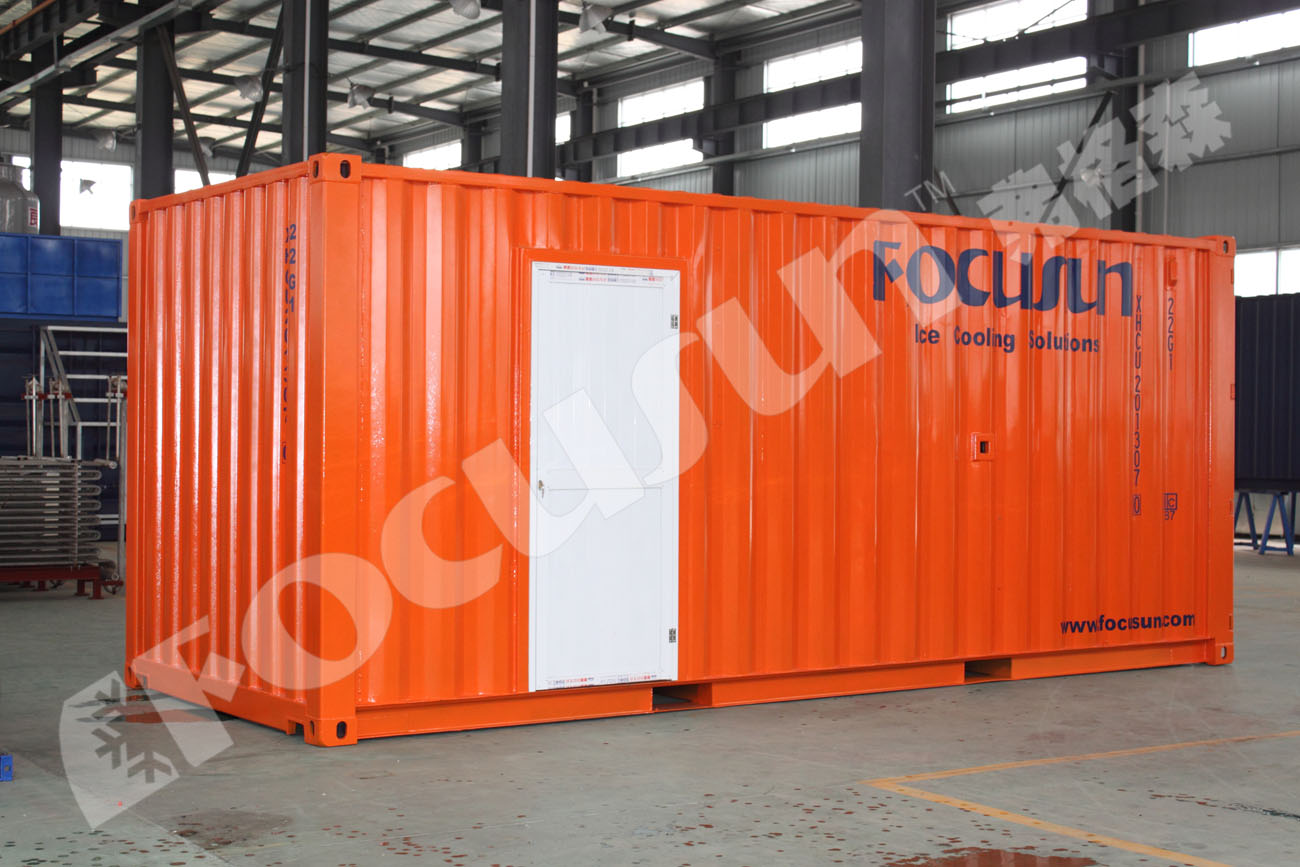
Remote construction sites rarely have spare buildings, stable grid power, or a permanent water supply. Yet many of them still need a steady supply of ice, whether for hot-weather concrete work, food storage, or dust and heat control around camp facilities. The usual answer — build a small ice plant room on site — takes time, requires a structure that will later be abandoned, and usually cannot move when the project moves. A containerized flake ice plant offers a different shape of answer: the ice-making system arrives inside a transportable housing, gets positioned, connected to water and power, and then starts producing flake ice near the point of use. this guide walks through why that form fits remote work and what the actual deployment sequence looks like from delivery to first ice.
Why Remote Sites Need Ice Production Without a Permanent Building
The core problem at a remote site is that ice demand is often temporary but intense. A bridge pier, dam lift, or large foundation pour may need cooling capacity for a defined construction window, not for the life of the facility. According to the American Cement Association, hot-weather concreting raises concerns about water demand, setting behavior, and cracking risk in mass placements, which is one reason ice is commonly discussed as a batching input. Building a permanent ice plant room for a window that lasts months rather than decades is hard to justify, especially when the building itself needs foundations, insulation, drainage, ventilation, and a separate refrigeration machinery area. A fixed plant-room system also assumes the site can support it. That means a reasonably level building pad, a structure that can carry the evaporator and compressor skid, room for a condenser with adequate airflow or water supply, and a location where the ice can be moved to where it is needed. Remote sites often fail one or more of these conditions. Ground may be uneven or still under preparation when ice is needed. Buildings may be prioritized for workers, storage, and workshops. Power may come from temporary generators before a permanent connection exists. Water may be trucked in or drawn from a temporary source, which changes how a water-cooled condenser can be operated. Dust from earthworks and haul roads adds another layer of wear on any exposed machinery. Containerized flake ice plants address this by treating the ice-making system as a transportable unit rather than a construction project. Focusun’s containerized flake ice product forms include the FIF-WC series, which covers 5 to 30 tons per day, and these units can be paired with ice storage rooms. A five-to-thirty-ton range is enough for many construction-support duties, from concrete batching ice to camp and food-service use, while remaining within a form factor that can be moved by road or sea. The housing protects the evaporator, compressor, electrical panel, and controls from dust and weather during operation, and it protects the same components during transport. That dual role is the practical reason containerization appears in remote-project planning: it turns a building project into a delivery and connection task. There is also a difference in how the system is owned. A plant room is built for one site and generally stays there. A containerized unit is a single asset that can be repositioned as the project shifts from one work front to another, or redeployed to the next job when the current one finishes. For projects with staged construction or multiple isolated work areas, that mobility changes the economics of keeping ice available.
How a Containerized Flake Ice Plant Moves From Delivery to Operation
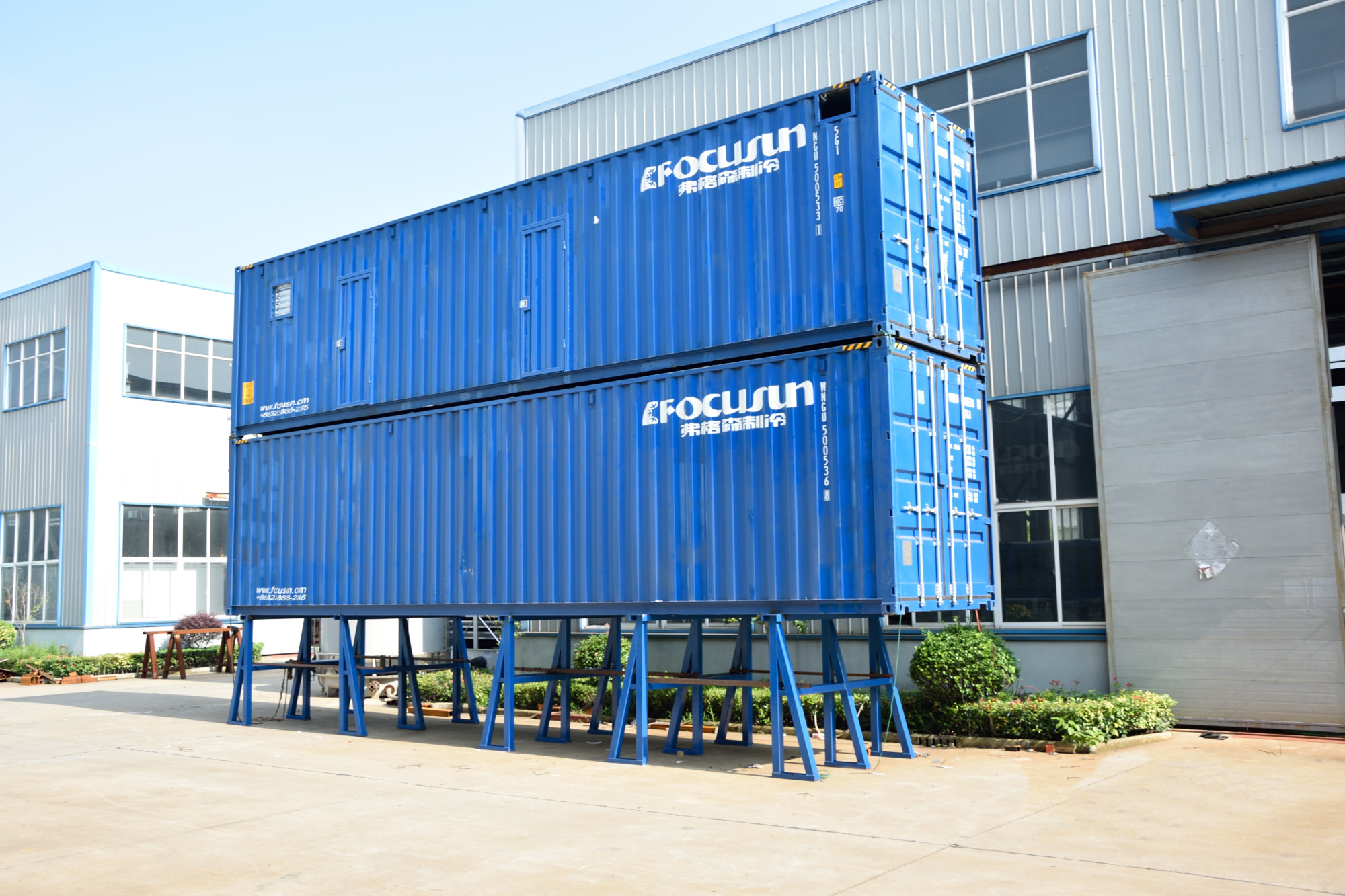
The deployment sequence is where containerized systems differ most from fixed plant rooms. Instead of a construction sequence, it is a logistics and connection sequence. The exact steps depend on site conditions, access roads, and available utilities, but the general order is consistent.
- Transport and site access. The unit is moved to site as a containerized package, so the first practical question is whether the route and offloading area can handle it. Soft ground, steep grades, narrow gates, and overhead lines can all block final access even when the main road is fine. Planning the offloading position early avoids moving the unit twice, which is both costly and risky for the refrigeration components inside.
- Positioning and mechanical setup. Once in place, the unit needs a stable, reasonably level base, clearance for condenser airflow or water connections, and enough surrounding space for maintenance access. Positioning also decides how ice will leave the unit — directly into a storage room, into bins, or into a conveying arrangement. Because the housing is self-contained, there is no separate machinery room to build, but the pad and access still matter.
- Utility connection. Water and power are the two interfaces that turn a delivered unit into a working plant. Water quality and supply pressure affect ice production and the water-cooled condenser if one is used; temporary site power may need to match the unit’s electrical requirements before startup. This is the stage where site conditions most often change the schedule, so it is worth confirming both supplies before the unit arrives rather than after.
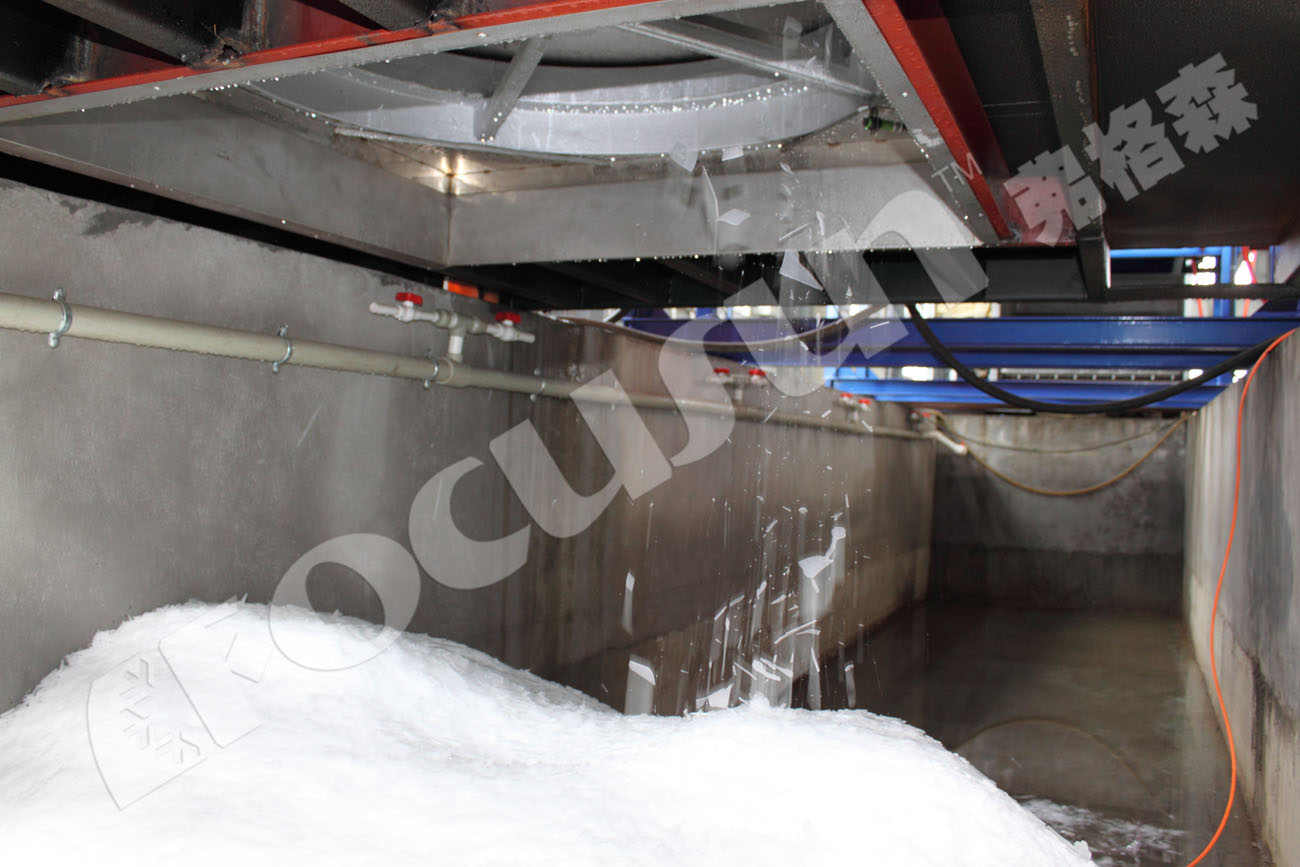
- Ice storage coordination. A flake ice plant produces ice continuously, but construction and camp demand is uneven. An ice storage room lets the plant run steadily while ice is drawn down during peak use, and it keeps flake ice from melting before it reaches the pour or the cold store. FAO material on commercial ice plant layout treats storage capacity planning as part of the plant design, not an add-on, and the same logic applies at remote sites.
After these steps, commissioning covers refrigeration charging checks, control settings, and a production trial before the unit is handed to site operations. Once running, the containerized plant behaves like any flake ice system: it needs water, power, condenser heat rejection, and somewhere for the ice to go. The difference is that all of this happens inside and around a unit that was delivered rather than constructed.
What Changes When Ice Making Moves With the Project
The biggest change is how ice supply is planned. With a fixed plant room, ice capacity is tied to one location, and moving it means piping, conveying, or trucking ice across the site. With a containerized plant, capacity moves to the demand. That is useful when a project has several isolated work areas, when the main pour location shifts over time, or when a camp and a batching area both need ice but are far apart. Instead of sizing a distribution system, planners can think about where the next ice demand will be and reposition the unit accordingly. The second change is in how the site is prepared. A plant room needs a building program: foundations, walls, insulation, doors, ventilation, drainage, and often a separate electrical room. A containerized unit needs a pad, a route, and utility connections. That reduces the amount of permanent construction tied to a temporary need, which matters on sites where every building trade is competing for the same labor and materials. It also reduces what has to be demolished or abandoned when the project ends. There are trade-offs to understand. Containerized housings have limited internal space, so very large daily capacities or extensive auxiliary equipment may not fit the same way they would in a purpose-built room. Ambient conditions still matter: a unit in direct sun and heavy dust needs attention to condenser airflow and cleaning, just as a plant room would. And because containerization is a product form rather than a delivery promise, project timing depends on site conditions, transport arrangements, and utility readiness. The practical approach is to treat the containerized plant as one item in the site mobilization plan, sequenced alongside power, water, and storage rather than after them. Focusun’s flake ice plant range illustrates how the form fits together: standard and containerized configurations, daily capacities from small commercial units up to large industrial systems, and the option to pair a plant with an ice storage room. For remote projects, the containerized portion of that range is the part that removes the building from the critical path. Readers who want to see how the containerized form is configured can review the flake ice plant product information as a reference point for their own site planning.
Conclusion
Containerized flake ice plants suit remote construction sites because they replace a building project with a delivery-and-connection task. The housing protects the refrigeration system during transport and operation, the unit can be repositioned as work fronts move, and ice storage can be coordinated so production and demand do not have to match hour by hour. The sequence matters more than the equipment list: transport and access, positioning, water and power connection, then storage coordination and commissioning. Timing and site preparation remain project-specific, so the useful planning move is to bring the ice plant into the site mobilization schedule early, alongside the utilities and storage it depends on.
FAQ
Q:Why are containerized flake ice plants used at remote construction sites?
A:They remove the need for a permanent plant room, which is often the slowest and least justified part of setting up ice production at a temporary site. The ice-making system arrives in a transportable housing that protects the evaporator, compressor, and controls from dust and weather, then gets positioned and connected to site water and power. That makes ice production possible where buildings are limited, and it lets the same asset move to the next work area or project instead of being abandoned with the site.
Q:What systems must be connected after a containerized flake ice plant arrives?
A:Water and power are the two essential interfaces. Water supply and quality affect ice production and any water-cooled condenser, while the electrical supply must match the unit’s requirements, which is a common issue where temporary generators are still in use. Beyond those, the unit needs condenser heat rejection — airflow for air-cooled configurations or a water circuit for water-cooled ones — plus a stable base, maintenance clearance, and a plan for where the finished ice will go.
Q:How does ice storage support a mobile flake ice plant?
A:Ice production is continuous, but site demand is not. An ice storage room lets the plant keep running at a steady rate while ice is drawn down during peak periods, such as a large concrete pour or a busy shift at a camp kitchen. It also keeps flake ice from melting before it is used, which matters because flake ice has a large surface area and melts quickly. FAO guidance on commercial ice plant layout treats storage capacity as part of plant design for exactly this reason.
Sources / References
Cement & Concrete FAQ – American Cement Association
Related Examples
Contacts & Support
Focusun Refrigeration CorporationRoom 603, Baohong Center
No. 7755 Zhongchun Rd
Shanghai CHINA
ZipCode: 201100
Tel: +86-21-5108 9946
Fax: +86-21-5227 2259
Email: enquiry@focusun.com
Sales: sales@focusun.com
Marketing: marketing@focusun.com
Press: press@focusun.com
Newsletter: newsletter@focusun.com
