


21
2026
Copeland Compressors in Industrial Flake Ice Systems
Introduction: A Copeland compressor drives the pressure difference that keeps refrigerant moving, so it shapes how steadily an industrial flake ice system can produce ice.
People often meet the compressor name before they understand the loop around it. A Copeland compressor is not a standalone badge that makes ice by itself. It is the pump that creates the pressure difference the rest of the refrigeration cycle depends on. In an industrial flake ice system, that pressure difference pulls heat out of the freezing surface so water can turn into thin, flexible flakes continuously. Looking at the compressor inside the full loop makes it easier to judge why pressure, cycling, and load behavior matter more than a single component label.
Where the Compressor Sits in the Refrigeration Cycle
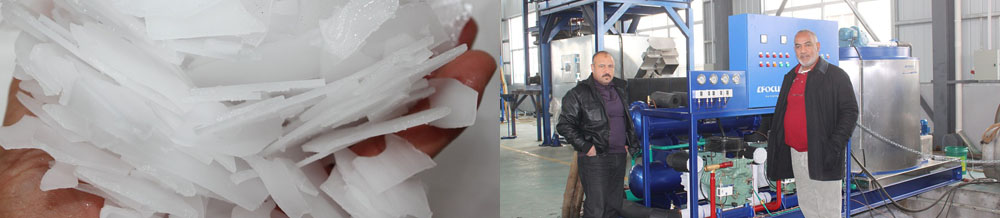
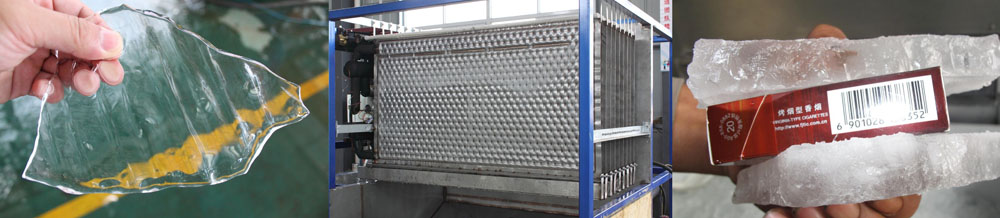
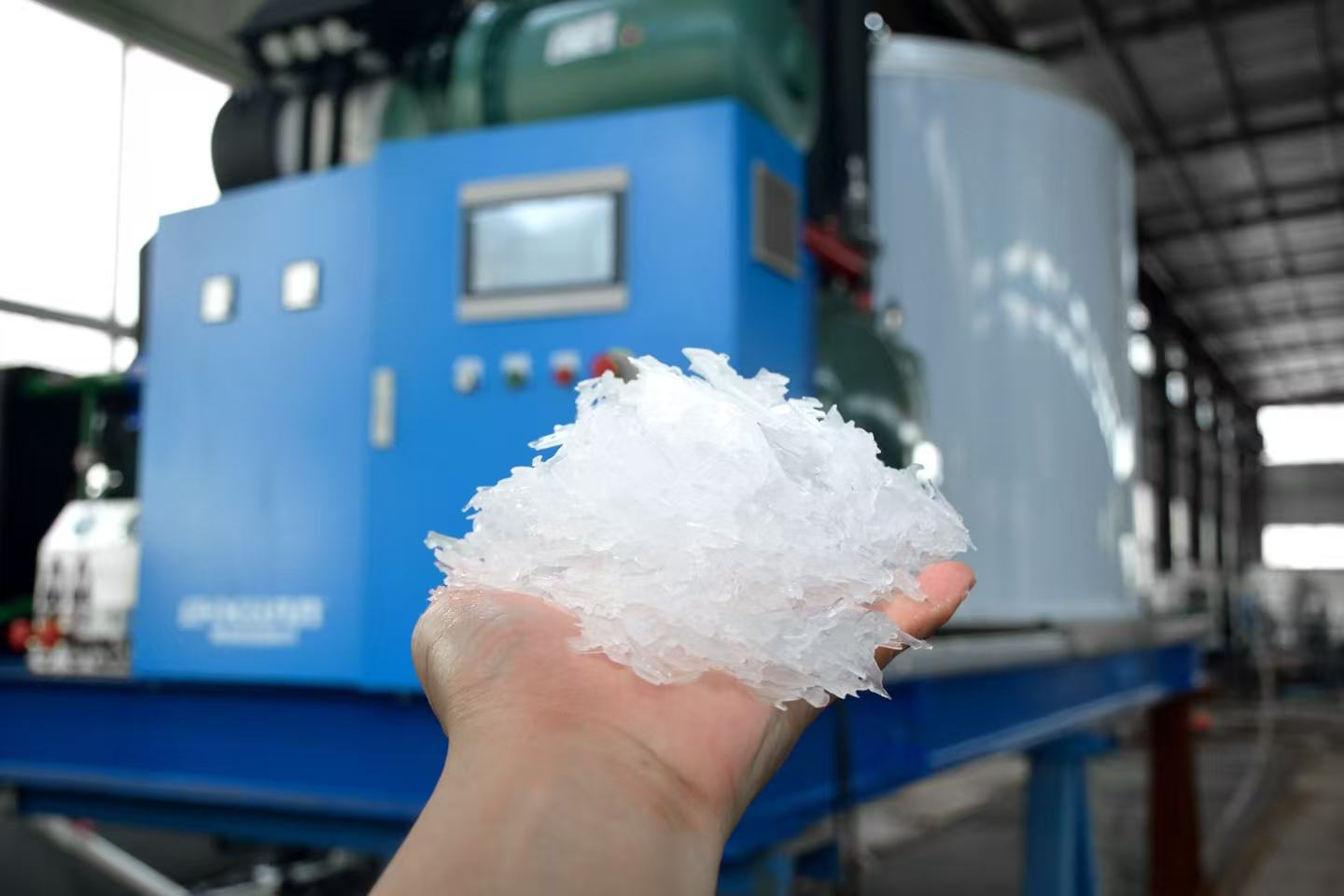
The refrigeration cycle in an industrial flake ice system has four main stations: compressor, condenser, expansion device, and evaporator. Low-pressure refrigerant vapor leaves the evaporator after absorbing heat from the freezing surface. The compressor pulls that vapor in and compresses it into a smaller volume at higher pressure and temperature. From there, the refrigerant moves to the condenser, where it rejects heat to air or water, changes into liquid, passes through the expansion device, and returns to the evaporator at low pressure. The compressor sits between the low side and the high side of the loop, and that position is what keeps the cycle moving. Without a pressure difference, refrigerant would not circulate in a controlled way, and the evaporator would not stay cold enough to freeze water into flake ice. In a flake ice machine, the evaporator is often a vertical drum that turns while water freezes in a thin layer on its surface. A scraper removes that layer as flake ice. The compressor must keep removing vapor from that drum so the surface temperature stays low. ASHRAE refrigeration material treats this cycle as the basic engineering frame for compressor work, which is why the compressor is best understood as part of the loop rather than as an isolated part number.
What Compression Does for Continuous Flake Ice Production
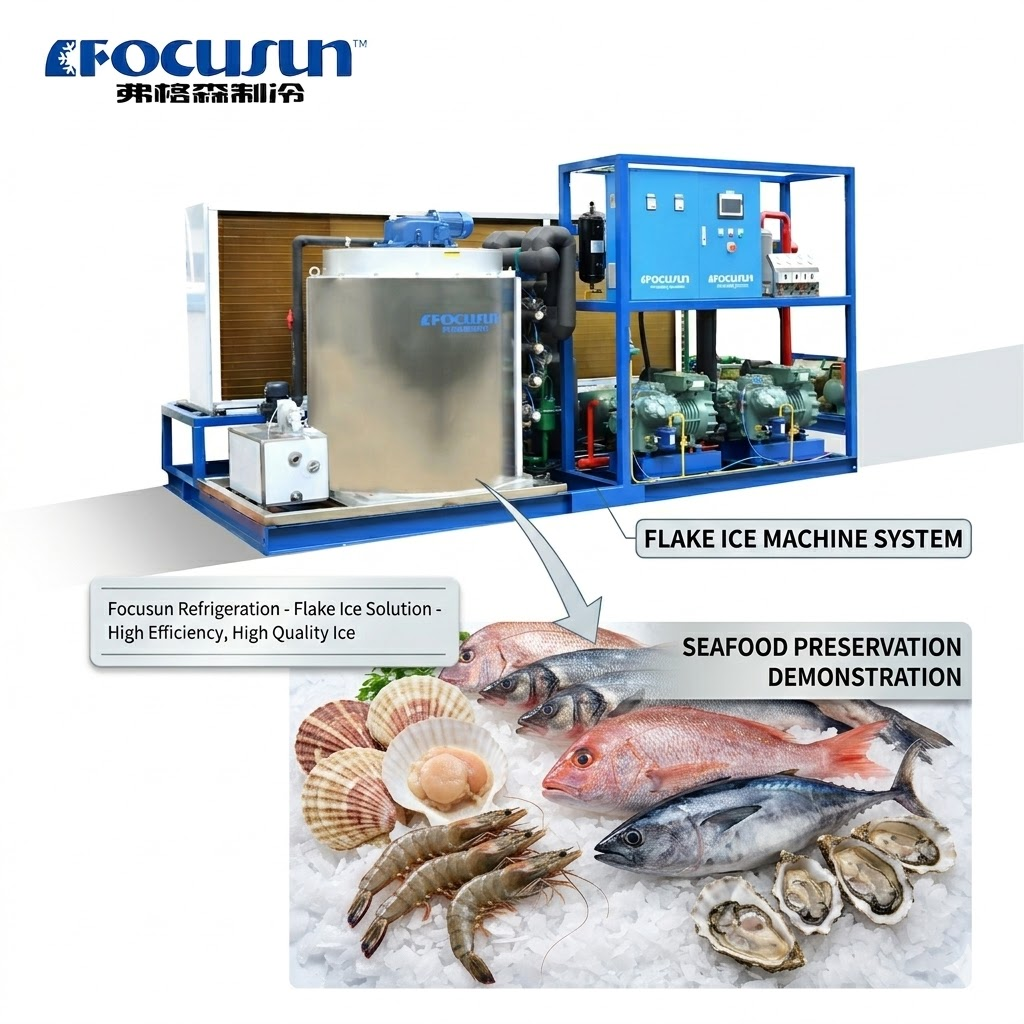
Compression does two jobs at once. It lowers the pressure on the evaporator side by pulling vapor away, and it raises pressure and temperature on the condenser side so heat can be rejected. That separation of low and high pressure is what allows heat to move from the ice-making surface to the outside environment. For continuous flake ice production, the useful effect is steady heat removal. Water must keep freezing at a consistent rate, and the scraper must meet a consistent ice layer. If compression is interrupted or unstable, the evaporator pressure rises, the freezing surface warms, and ice quality or output can drift. The compressor therefore supports continuous production by maintaining the pressure balance that keeps refrigerant circulating and the evaporator cold. In many industrial flake ice systems, including Focusun product forms that list Copeland compressor configuration, that compressor is part of the mechanical package. The listed configuration tells a learner what kind of compressor is used; the rest of the system still needs to match the site, load, and maintenance plan.
1. Why Suction and Discharge Pressure Matter in Ice Making
Suction pressure reflects the pressure on the low side of the system, where refrigerant absorbs heat in the evaporator. In ice making, that pressure is tied to the evaporating temperature of the refrigerant. A stable suction pressure helps keep the freezing surface at a stable temperature, which is what lets water freeze into a thin, even layer of flake ice. If suction pressure is too high, the evaporating temperature rises, heat removal becomes weaker, and the ice can be softer or slower to form. If suction pressure is too low, the system may be starved, the evaporator may frost or ice too heavily, and the compressor may operate outside its comfortable range. Discharge pressure reflects the high side, where the compressor pushes hot vapor toward the condenser. It is linked to condensing temperature and the compression ratio. A high discharge pressure means the compressor is working against more resistance, which increases load and can trigger protection controls. A low discharge pressure can signal that the condenser is not matched to the load or that refrigerant charge is off. Service technicians watch both readings because together they show whether the compressor is maintaining the pressure difference the cycle needs. The numbers are not fixed goals; they shift with ambient conditions, water temperature, ice demand, and condenser performance.
2. How Compressor Cycling Affects Stable Ice Output
Compressor cycling describes how the compressor changes capacity as ice demand rises and falls. Some systems switch the compressor on and off; others use cylinder unloading, variable-speed drive, or multiple compressor stages. All of these methods change how much refrigerant vapor is moved per minute. In flake ice production, stable output depends on stable evaporator conditions. If the compressor cycles too often, the suction pressure and evaporating temperature swing up and down. The freezing surface alternates between warmer and colder states, so the ice layer may form unevenly. The scraper then meets thicker or thinner ice, which affects mechanical load and output consistency. A well-matched control strategy keeps compressor capacity close to the actual cooling demand instead of making large jumps. Stable output still depends on the full system matching the compressor to the evaporator, condenser, and controls as the machine runs.
How Compressor Load Changes With Ice Making Demand
Compressor load is not one fixed number. It changes with every condition that affects heat removal. When the ice machine starts, the evaporator and water are warmer, so the compressor may pull more vapor and run at a higher load. As the drum reaches its working temperature, the load settles. If the incoming water is warmer or the ambient air is hotter, the system has more heat to move, so the compressor works harder. If the condenser cannot reject heat efficiently, discharge pressure rises and the compression ratio increases. If the evaporator loses heat transfer because of ice build-up, oil return problems, or low refrigerant charge, suction pressure can fall and the compressor may run with a different balance of pressures. Load also follows production demand. A plant that needs more ice per hour asks the compressor to move more refrigerant, while a lower demand may allow capacity control to reduce work. These changes are normal. The compressor’s job is to respond without losing lubrication, overheating, or cycling in a way that upsets the evaporator. That is why system design, controls, and maintenance all matter around the compressor. A learner can read pressure gauges and hear load changes, but the real story is the whole loop responding to heat. Focusun flake ice plant product forms list Copeland compressor configuration across several industrial product shapes, which gives a concrete example of how a known compressor is placed inside a larger system. The configuration is one fact to consider; stable ice still depends on matching the compressor, evaporator, condenser, controls, and site conditions.
Conclusion
Copeland compressors matter in industrial flake ice systems because they create the pressure difference that keeps refrigerant moving and the evaporator cold. That role is easier to understand when the compressor is placed back inside the full loop with the condenser, expansion device, evaporator, and controls. Suction and discharge pressure show how well that loop is balancing heat removal. Cycling and load changes show how the compressor responds as ice demand shifts. For a refrigeration system learner, the useful takeaway is not a brand slogan but a system view: the compressor is a key mechanical part of stable ice production, and its performance depends on how the whole plant is designed, controlled, and maintained. Readers who want to see how Copeland compressor configuration appears in real industrial flake ice product forms can review the Focusun flake ice plant page for that specific system detail.
FAQ
Q:What role does a Copeland compressor play in an industrial flake ice system?
A:It creates the pressure difference that moves refrigerant between the evaporator and condenser. On the low side, it pulls vapor away from the evaporator so the freezing surface stays cold enough to form flake ice. On the high side, it raises refrigerant pressure and temperature so heat can be rejected in the condenser. In Focusun product forms, Copeland compressor configuration is listed as part of the industrial flake ice system package.
Q:How does the compressor support continuous ice production?
A:Continuous flake ice needs continuous heat removal. The compressor keeps the evaporator pressure low and the condenser pressure high, so refrigerant keeps circulating and absorbing heat from the freezing drum. When ice demand changes, capacity controls adjust how much vapor the compressor moves. That balance helps the evaporator avoid large temperature swings, which supports a steadier ice layer and more consistent scraping.
Q:Why do suction and discharge pressures matter in the refrigeration cycle?
A:Suction pressure is tied to evaporating temperature, so it affects how quickly water freezes and how stable the ice layer is. Discharge pressure is tied to condensing temperature and compression ratio, so it shows how hard the compressor is working against the high side. Together, the two readings tell a technician whether refrigerant flow, heat removal, and compressor load are in balance.
Sources / References
Substitutes in Industrial Process Refrigeration – US EPA
Related Examples
Further Reading
Contacts & Support
Focusun Refrigeration CorporationRoom 603, Baohong Center
No. 7755 Zhongchun Rd
Shanghai CHINA
ZipCode: 201100
Tel: +86-21-5108 9946
Fax: +86-21-5227 2259
Email: enquiry@focusun.com
Sales: sales@focusun.com
Marketing: marketing@focusun.com
Press: press@focusun.com
Newsletter: newsletter@focusun.com
