







25
2025

Fruit and Vegetable Suppliers: Cold Storage is the “Lifeline” for Supply Chain Stability
In the fruit and vegetable industry’s supply chain system, cold storage is no longer a dispensable auxiliary facility, but a core component determining the survival and development of suppliers. For suppliers who deal with fresh fruits and vegetables daily, the value of cold storage permeates the entire process from procurement and storage to sales. It not only solves the natural pain point of perishable fruits and vegetables but also provides crucial support for business expansion. Its necessity can be analyzed from multiple dimensions.

From the perspective of the physical characteristics of fruits and vegetables, cold storage is the core barrier to delaying spoilage and preserving “freshness.” Fresh fruits and vegetables continue to respire after harvesting. At room temperature, sugar and water are rapidly consumed, and microorganisms multiply rapidly, leading to quality deterioration. For example, strawberries can only be stored at room temperature for 1-2 days, and their skin easily softens and molds. Leafy green vegetables such as spinach and lettuce will wilt and turn yellow after 24 hours at room temperature, significantly reducing their commercial value. Cold storage, through precise temperature control (typically between 0-15℃ for fruit and vegetable storage) and humidity, can significantly inhibit respiration and microbial activity. Citrus fruits can be stored for 2-3 months in cold storage at 5-8℃, and apples can even be preserved for over 6 months. This means suppliers don’t need to “harvest and sell immediately,” having ample time to complete sorting, packaging, and transportation, fundamentally avoiding the dilemma of “harvest equals loss.”
From a market supply and demand perspective, cold storage serves as a “buffer” for suppliers to cope with fluctuations and stabilize profits. Fruit and vegetable production has significant seasonality and regionality; for example, watermelons and peaches are concentrated in the summer, while in winter they rely on greenhouse vegetables or shipments from the south. Without cold storage, during peak season, the supply of fruits and vegetables far exceeds market demand, forcing suppliers to sell at low prices, or even have their produce rot due to oversupply; during off-season, market shortages leave suppliers facing the awkward situation of “no goods to sell.” Cold storage breaks down these time and space limitations: during peak seasons, suppliers can store excess fruits and vegetables in cold storage to avoid price crashes; during off-seasons, they can release the stored produce to the market to fill supply gaps, maintaining a stable supply while securing higher profit margins. For example, garlic suppliers in Shandong can extend the sales cycle of garlic from 1-2 months during the harvest season to the whole year through cold storage, effectively mitigating market price fluctuations and ensuring long-term profits.
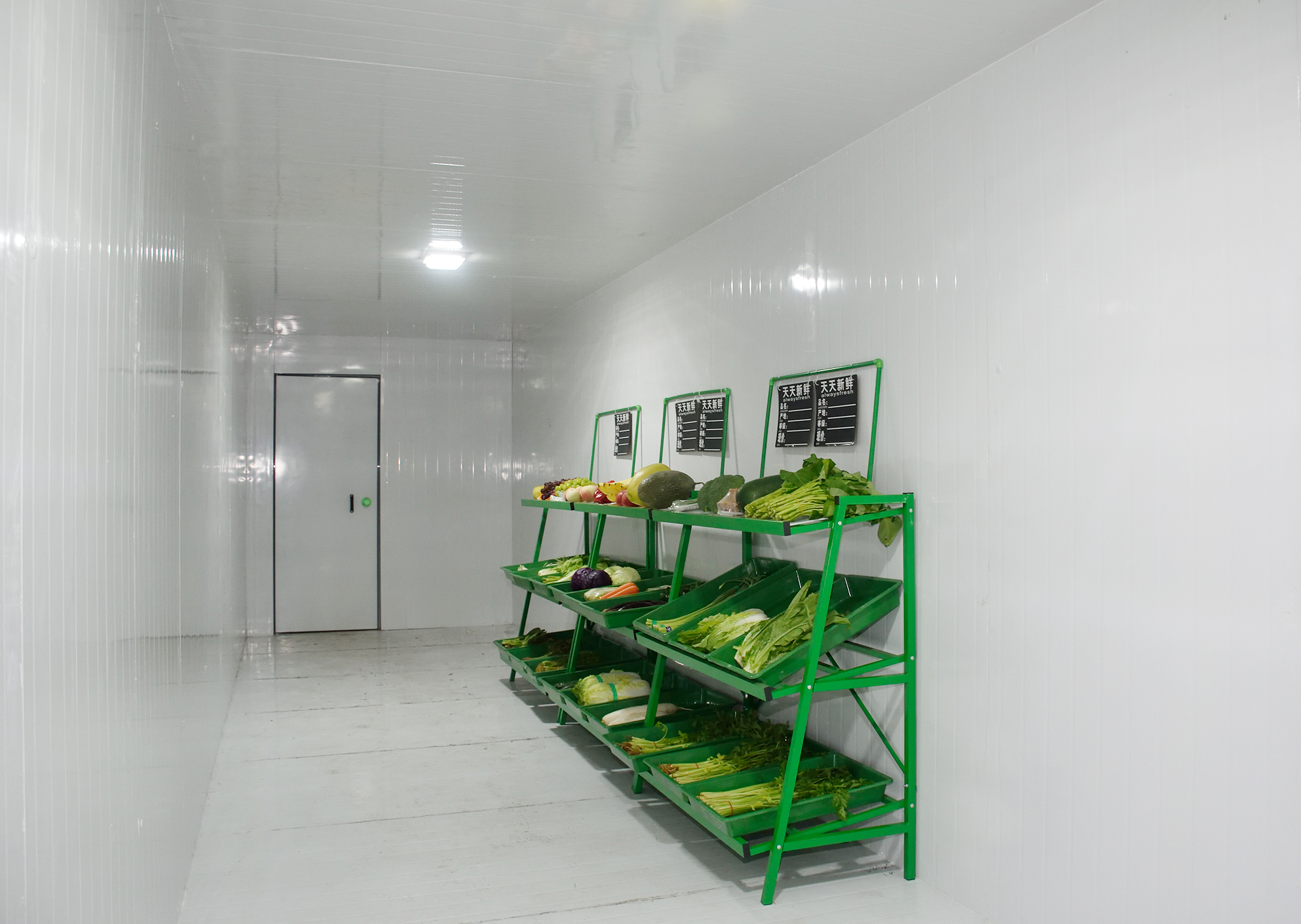
From a cost control and spoilage management perspective, cold storage is a “key link” in reducing operating costs. The spoilage rate of fruits and vegetables during transportation and storage directly affects the supplier’s profits. Statistics show that fruit and vegetable suppliers who do not use cold storage generally have a spoilage rate of 20%-30%, and for some perishable fruits and vegetables such as lychees and bayberries, the spoilage rate even exceeds 50%. These losses not only mean wasted procurement costs but also increase additional expenses such as waste disposal and manual sorting. Cold storage, through a constant temperature and humidity environment, can control the spoilage rate of fruits and vegetables to within 5%. Taking a supplier that purchases 10 tons of fruits and vegetables daily as an example, using cold storage can reduce daily losses by 1.5-2.5 tons. Based on an average price of 2 yuan per kilogram, this translates to annual cost savings of 2.19 million to 3.65 million yuan, which is crucial for controlling operating costs and improving profitability.
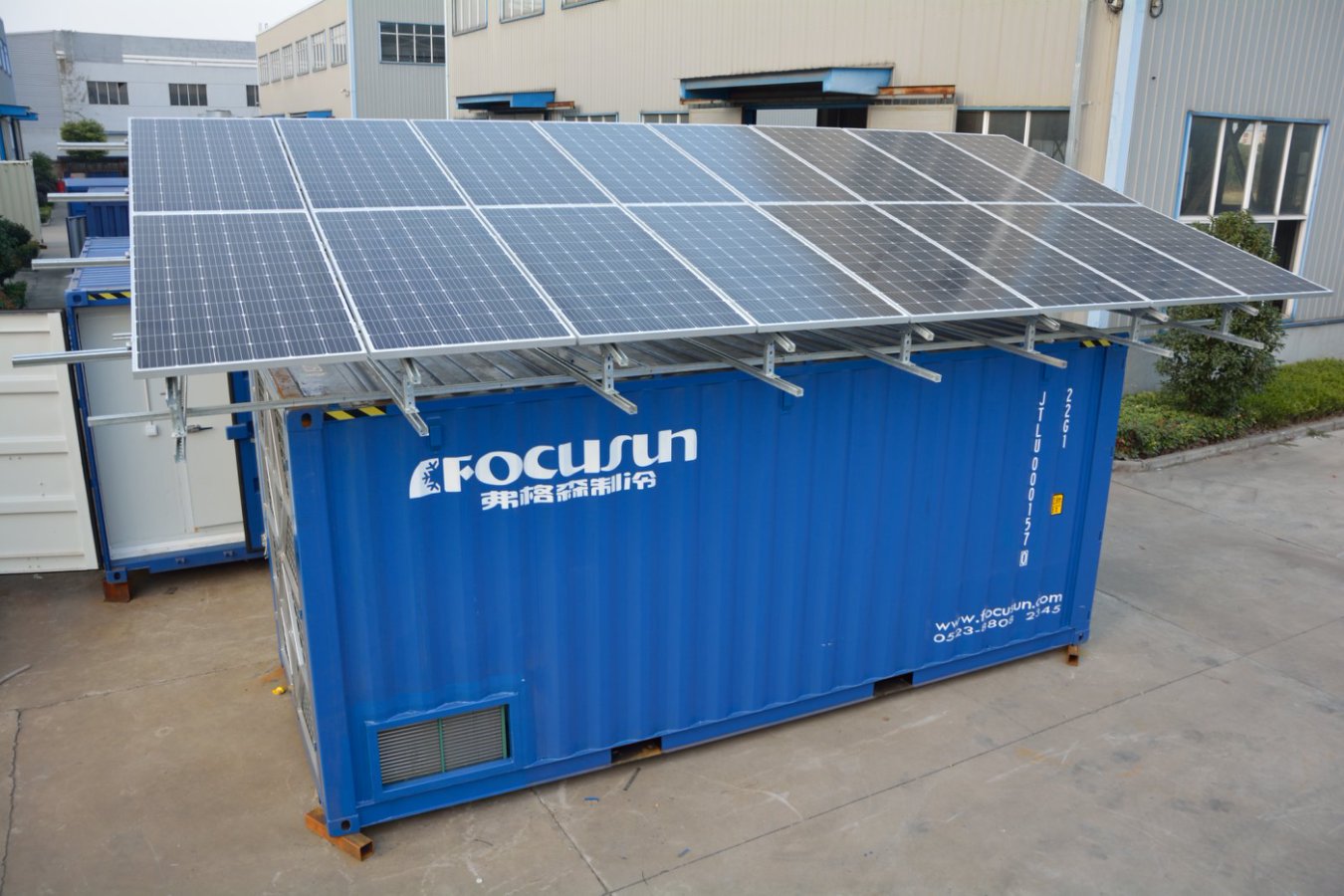
Furthermore, with the rapid development of cold chain logistics, cold storage has become an essential condition for suppliers to integrate into the modern supply chain. Today, downstream customers such as large supermarkets, chain restaurants, and e-commerce platforms consider cold storage capacity as a crucial factor when selecting suppliers. Without cold storage, suppliers cannot meet customers’ demands for “on-demand supply” and “long-term stable supply,” and may be excluded from the mainstream supply chain. At the same time, cold storage, combined with cold chain transportation, can achieve end-to-end low-temperature protection “from the production site to the sales site,” further expanding the sales scope—for example, the raw material for Yunnan flower cakes (fresh roses), through cold storage and cold chain transportation, can be sold throughout the country and even overseas, opening up a larger market space for suppliers.
In conclusion, for fruit and vegetable suppliers, cold storage is far more than a simple “storage room”; it is a “lifeline” that ensures freshness, regulates market supply and demand, reduces operating costs, enhances quality reputation, and integrates into the modern supply chain. In the increasingly competitive fruit and vegetable market, having well-equipped cold storage facilities not only helps suppliers mitigate business risks but also gives them a competitive edge, enabling sustainable development.
Contacts & Support
Focusun Refrigeration CorporationRoom 603, Baohong Center
No. 7755 Zhongchun Rd
Shanghai CHINA
ZipCode: 201100
Tel: +86-21-5108 9946
Fax: +86-21-5227 2259
Email: enquiry@focusun.com
Sales: sales@focusun.com
Marketing: marketing@focusun.com
Press: press@focusun.com
Newsletter: newsletter@focusun.com
